
Introduction
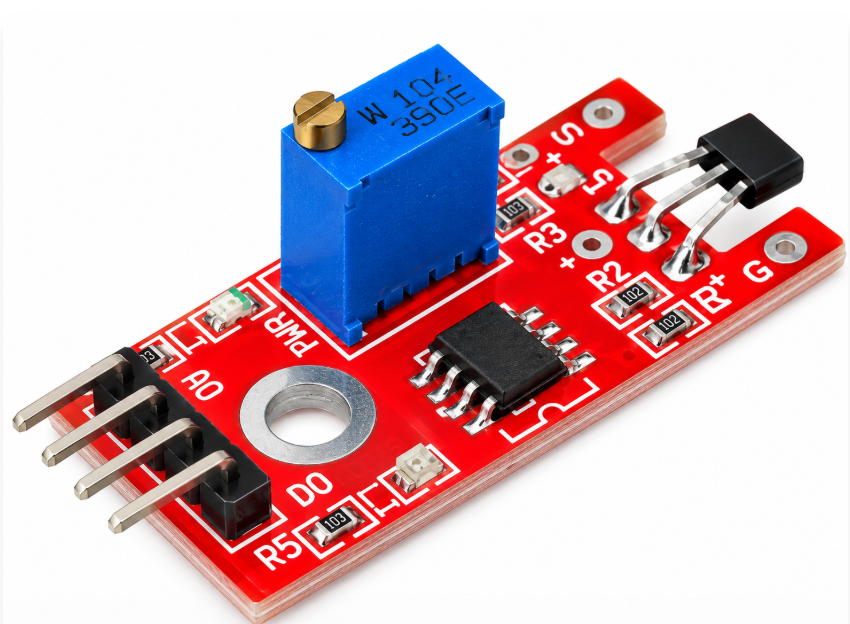
Automotive wheel-speed sensors and crankshaft position sensors both rely on exactly this physical effect to detect passing magnets without any physical contact at all. In this experiment, a linear Hall effect sensor module is wired to the STM32F070RB, providing a graduated analog reading of nearby magnetic field strength alongside a simple digital presence flag, both printed together over UART.
2. Scope
This experiment covers understanding the Hall effect and how a linear Hall sensor converts magnetic field strength into a proportional analog voltage, and reading both its analog and digital outputs. This reinforces the combined analog and digital sensor pattern applied here to magnetic sensing, and lays conceptual groundwork for other current and magnetic sensors that also rely on the Hall effect internally.
3. Prerequisite
3.1 Hardware
-
STM32 Nucleo-F070RB development board
-
Linear Hall effect sensor module, with analog and digital outputs
-
A small magnet, for testing
-
Breadboard and jumper wires
-
Micro-USB cable
-
PC with PuTTY
3.2 Software
-
STM32CubeMX (standalone)
-
STM32CubeIDE
-
ST-LINK USB driver
-
PuTTY, or an equivalent serial terminal application
Community Q&A
0 questionsAsk questions and get answers from our community and staff moderators.
No questions yet — be the first to start the conversation!
Ask a Question
Please log in to ask a question or post a reply.
Login to Participate