
Introduction
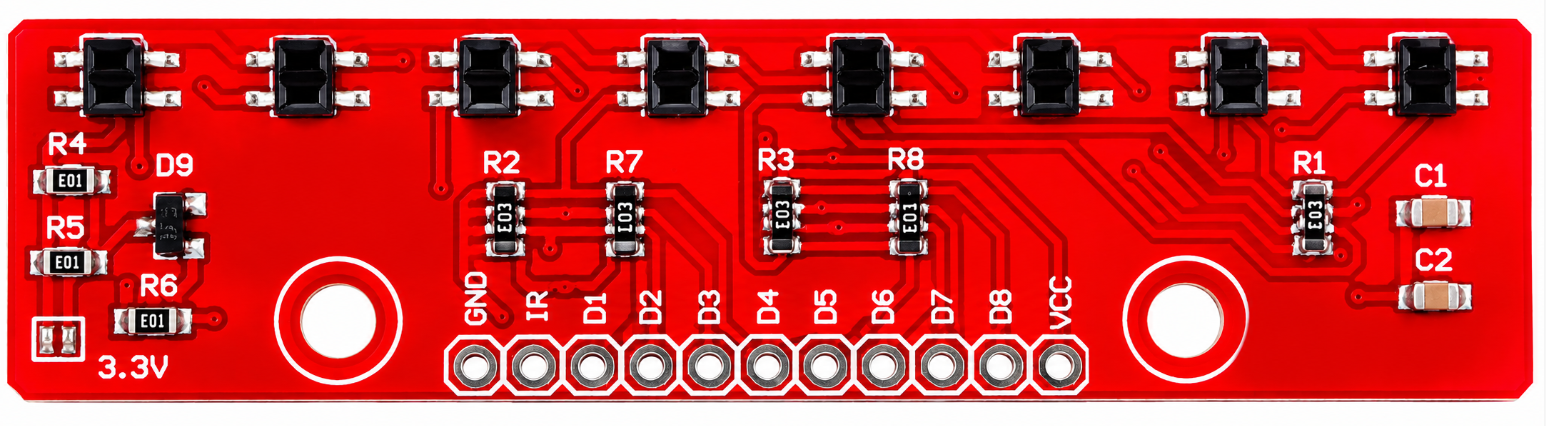
Autonomous line-following robots, a common project in robotics competitions, rely entirely on exactly this kind of sensing to know whether they are still tracking their intended path. In this experiment, an infrared line-tracking sensor module is wired to the STM32F070RB as a simple digital input, and the microcontroller reports over UART whether it currently detects the line beneath it.
2. Scope
This experiment covers understanding how surface reflectivity differences, a dark line against a light background or the reverse, are detected using infrared reflectance sensing, and reading the sensor's digital output. This is a straightforward digital sensor reading, forming the fundamental building block a full line-following robot would extend into a multi-sensor array.
3. Prerequisite
3.1 Hardware
-
STM32 Nucleo-F070RB development board
-
IR line-tracking sensor module, single channel, digital output
-
A test surface with clear light and dark contrast, such as a black line drawn on white paper
-
Breadboard and jumper wires
-
Micro-USB cable
-
PC with PuTTY
3.2 Software
-
STM32CubeMX (standalone)
-
STM32CubeIDE
-
ST-LINK USB driver
-
PuTTY, or an equivalent serial terminal application
Community Q&A
0 questionsAsk questions and get answers from our community and staff moderators.
No questions yet — be the first to start the conversation!
Ask a Question
Please log in to ask a question or post a reply.
Login to Participate