
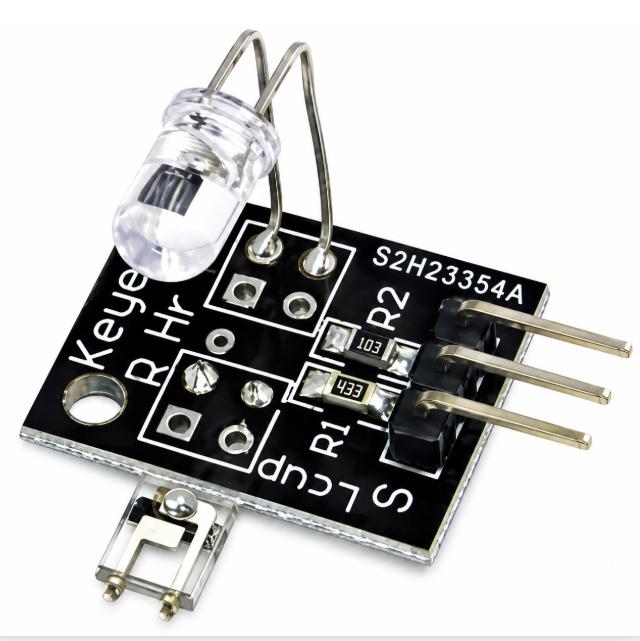
Photodiode Pulse Sensor - Heart Beat Measure
Photodiode Pulse Sensor
Introduction
Fitness trackers and pulse oximeters both measure heart rate using exactly this same optical technique, shining light into skin and watching how much of it bounces back as blood pulses through nearby vessels. In this experiment, a photodiode-based pulse sensor is wired to the STM32F070RB's analog to digital converter, and the microcontroller detects individual heartbeat pulses and calculates a live beats-per-minute estimate.
2. Scope
This experiment covers continuously sampling the sensor's analog output at a fast rate, implementing a simple peak-detection algorithm to identify individual heartbeat pulses, and calculating a beats-per-minute value from the time elapsed between detected peaks. This introduces signal peak detection, a technique broadly applicable beyond heart-rate sensing to any periodic analog waveform where individual events need to be counted over time.
3. Prerequisite
3.1 Hardware
-
STM32 Nucleo-F070RB development board
-
Photodiode-based pulse or heartbeat sensor module
-
Breadboard and jumper wires
-
Micro-USB cable
-
PC with PuTTY
3.2 Software
-
STM32CubeMX (standalone)
-
STM32CubeIDE
-
ST-LINK USB driver
-
PuTTY, or an equivalent serial terminal application
Community Q&A
0 questionsAsk questions and get answers from our community and staff moderators.
No questions yet — be the first to start the conversation!
Ask a Question
Please log in to ask a question or post a reply.
Login to Participate